 GrabCAD
Container concept
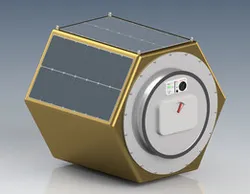
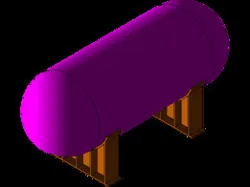
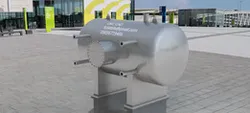
The basis of the container design is a pressurized vessel, the material of which is sheet metal (stainless steel). The vessel is round in shape to better resist pressure drops. According to the simulation, stainless steel with a thickness of 3 mm is suitable for resisting an excess pressure of 14.7 psi.
On the outside, the container have a hard shell made of a durable polymer material. The space between the outer shell and the vessel is filled with thermal insulation material. The container contain an electric air conditioning unit, which have the function of both heating and cooling, depending on the temperature that needs to be maintained inside. Inside, the container must contain partitions to divide the space into separate cells for each CTB. Partitions have perforations for better circulation of air coming from the air conditioning unit.
The control panel is located above the access hatch (67cmx47cm). A pressure valve handle is placed on the panel, which allows you to equalize the pressure inside the container and the environment to which it is connected. The panel interface contain climate control elements for setting the required temperature inside the container and informing about the actual temperature inside.
Also, the control panel contain a connector for connecting an external power source and a connector for data transmission.
The electrical components of the container are powered by a battery inside the container. The battery can be charged both from solar panels and from an external power source through the connector.
The container has a hexagonal shape. This shape allows you to install the side solar panels at an angle of 60 degrees, which will reduce dust settling on their surface.
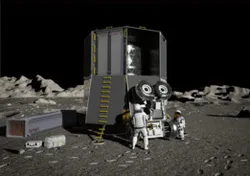
Loading and unloading of the container onto the rover will be done with the help of an electrically operated manipulator crane and the appropriate fasteners on the container. I consider the radial arrangement of the CTB bags in the container to be the most optimal - this will allow access to each bag separately at any time. Cargo belts are provided to fix the bags from moving. Belts are attached to the partitions. This type of container can be permanently attached to a rover or ground habitation module, and each bag can be unloaded as needed. Also, this container can be used as additional storage space and source of energy from its solar panels.
This concept can be easily scaled for optimal capacity depending on mission needs.
Direct link to the original creator's page
Also Available On
More from Vladyslav Biriukov
Similar Models
Model Specifications
Frequently Asked Questions
Where is Container concept published?
This model is published by its creator on GrabCAD. STLFinder only indexes it: the "View on GrabCAD" button above opens the original page, where the creator shares the OTHER, RENDERING, STEP / IGES files under their own license.
What 3D printer can I use for this model?
This model is compatible with most FDM 3D printers (Creality Ender 3, Prusa MK3S+, Bambu Lab, etc.) and resin printers (Elegoo, Anycubic). Check the original page for recommended print settings and materials.
Is this 3D model free?
Yes, the creator shares it at no cost on GrabCAD. Some creators accept tips or donations.
Can I modify this file?
Check the license (see original page) on the original GrabCAD page. Most STL files can be modified using free software like Blender, TinkerCAD, or Meshmixer.