 GrabCAD
FLOW SIMULATION BOAT SWLT
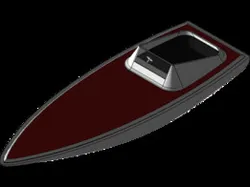
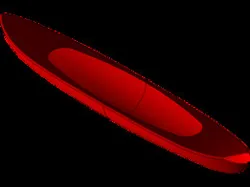
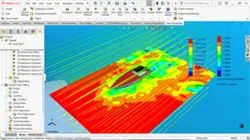
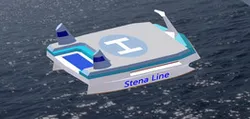
Based on the presented simulation model, the boat is placed in the computational domain to analyze the interaction between water and air flows around the hull. The tapered shape of the bow allows fluid to divide better so that water and air flow can follow the contour of the boat more smoothly. At the front of the boat, it is estimated that there will be an increase in pressure due to the impact of the flow (stagnation area), while along the side of the hull the flow will experience acceleration which helps reduce resistance. At the stern, the flow tends to separate from the surface and forms a wake area characterized by turbulence and a decrease in fluid velocity. In water media, this phenomenon is the main source of hydrodynamic resistance, while in air media aerodynamic resistance is relatively smaller because the upper cross-sectional area of the boat is not too large. Overall, the hull design shows quite streamlined characteristics so that it is able to direct the flow well, but optimization at the stern can still be done to reduce turbulence, reduce wake and increase the efficiency of the boat's movement in the water.
Direct link to the original creator's page
More from M FIGIS RAMADHANI

Similar Models
Model Specifications
Frequently Asked Questions
How do I download FLOW SIMULATION BOAT SWLT?
Click the "View on GrabCAD" button above to visit the original model page on GrabCAD. You can download the SOLIDWORKS file directly from the creator's page for free.
What 3D printer can I use for this model?
This model is compatible with most FDM 3D printers (Creality Ender 3, Prusa MK3S+, Bambu Lab, etc.) and resin printers (Elegoo, Anycubic). Check the original page for recommended print settings and materials.
Is this 3D model free to download?
Yes, this model is available as a free download on GrabCAD. Some creators accept tips or donations.
Can I modify this file?
Check the license (see original page) on the original GrabCAD page. Most STL files can be modified using free software like Blender, TinkerCAD, or Meshmixer.