 GrabCAD
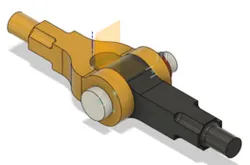
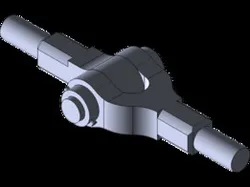
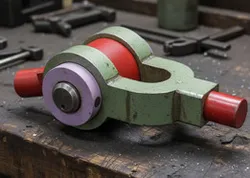
Knuckle Joint
Ever wondered how mechanical systems achieve controlled, angular movement? Meet the knuckle joint.
This deceptively simple coupling is designed to connect two rods that are under a tensile load (a pulling force), but it can also accommodate some compression. Its primary function is to permit a limited amount of flexibility, allowing the connected parts to pivot relative to each other—much like the human finger.
Key Components:
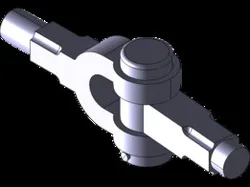
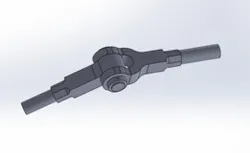
Fork End: The double-eyed section that acts like a clamp.
Eye End: The single-eyed section that fits inside the fork.
Knuckle Pin: The solid pin that holds the assembly together, often secured by a collar and a taper pin.
Why is it so useful?
It's perfect for applications where alignment between two rods might not be perfect or where articulation is necessary. You'll find it in:
Automotive Steering Systems: In tie rods, allowing the wheels to turn.
Valve Linkages: Connecting levers to control valves.
Bicycle Brakes: In some caliper brake designs.
Lifting Equipment: Such as chains or crane mechanisms.
Its robust design makes it a reliable choice for transmitting force while providing a crucial degree of freedom. A true testament to elegant, functional engineering.
Direct link to the original creator's page
Also Available On
Similar Models
Model Specifications
Frequently Asked Questions
Where is Knuckle Joint published?
This model is published by its creator on GrabCAD. STLFinder only indexes it: the "View on GrabCAD" button above opens the original page, where the creator shares the SOLIDWORKS files under their own license.
What 3D printer can I use for this model?
This model is compatible with most FDM 3D printers (Creality Ender 3, Prusa MK3S+, Bambu Lab, etc.) and resin printers (Elegoo, Anycubic). Check the original page for recommended print settings and materials.
Is this 3D model free?
Yes, the creator shares it at no cost on GrabCAD. Some creators accept tips or donations.
Can I modify this file?
Check the license (see original page) on the original GrabCAD page. Most STL files can be modified using free software like Blender, TinkerCAD, or Meshmixer.