 GrabCAD
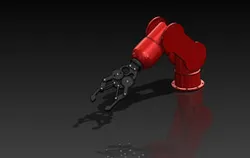
ROBOT ARM
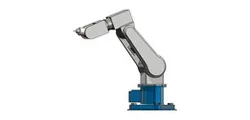
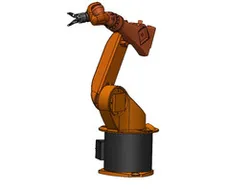
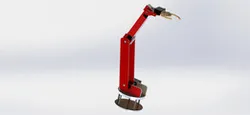
The term robot comes from the Czech word robota, generally translated as "forced labor." The most common manufacturing robot is the robotic arm. A typical robotic arm is made up of seven metal segments, joined by six joints. The computer controls the robot by rotating individual step motors connected to each joint (some larger arms use hydraulics or pneumatics). An industrial robot with six joints closely resembles a human arm, it has the equivalent of a shoulder, an elbow and a wrist. Typically, the shoulder is mounted to a stationary base structure rather than to a movable body. This type of robot has six degrees of freedom, meaning it can pivot in six different ways. Robotic arms can perform a wide range of tasks beyond welding depending on the tools that are attached to the end of their arms. Current innovations in end of arm tools include; 3D Printing tool heads, heating devices to mould and bend materials, and suction devices to fold sheet metal.
Direct link to the original creator's page
Also Available On
More from Pattabiraman Rajakumar

Similar Models

Model Specifications
Frequently Asked Questions
Where is ROBOT ARM published?
This model is published by its creator on GrabCAD. STLFinder only indexes it: the "View on GrabCAD" button above opens the original page, where the creator shares the RENDERING, SOLIDWORKS files under their own license.
What 3D printer can I use for this model?
This model is compatible with most FDM 3D printers (Creality Ender 3, Prusa MK3S+, Bambu Lab, etc.) and resin printers (Elegoo, Anycubic). Check the original page for recommended print settings and materials.
Is this 3D model free?
Yes, the creator shares it at no cost on GrabCAD. Some creators accept tips or donations.
Can I modify this file?
Check the license (see original page) on the original GrabCAD page. Most STL files can be modified using free software like Blender, TinkerCAD, or Meshmixer.