 NIH 3D
Rope organiser
NOW WITH MASKING TOOL FOR EASY INSTALLATION
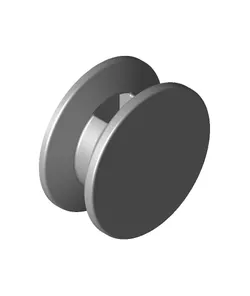
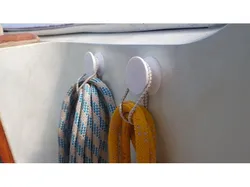
New design by Fiber Printing: Use the masking ring to easily glue the hook to ceramic tiles or other surfaces and form a beautiful joint. The rope organizer hook secures your coils of rope in your lab. Use 3 mm thick bungee cord to hold the coils up and secure it to the hook. The knot is neatly hidden from sight in the dedicated knot chamber. The foot provides a large area to glue the hook to a flat surface. No drilling is needed, easy installation. Secure the masking tool to the wall surface using masking tape. Use a thick layer of sikaflex or other similar glue between the back side of the hook and the wall surface. At the end of life cycle just cut the glue layer with an exacto knife and remove the glue residues.
Printing
Use PLA as it is compatible with most glues and is plenty strong for this application. 2-3 perimeters and around 30-60 percent triangular infill works great. The steepest overhang is 65 degrees, so it is best to chose a low layer height or set it to variable.
Direct link to the original creator's page
Also Available On
Similar Models
 Thangs
 Thingiverse
 Thangs
 NIH 3D
 NIH 3D
 Printables
 NIH 3D
 Thingiverse
Model Specifications
Frequently Asked Questions
Where is Rope organiser published?
This model is published by its creator on NIH 3D. STLFinder only indexes it: the "View on NIH 3D" button above opens the original page, where the creator shares the GLB, JPEG, JPG, PNG, STL, WRL, X3D files under their own license.
What 3D printer can I use for this model?
This model is compatible with most FDM 3D printers (Creality Ender 3, Prusa MK3S+, Bambu Lab, etc.) and resin printers (Elegoo, Anycubic). Check the original page for recommended print settings and materials.
Is this 3D model free?
Yes, the creator shares it at no cost on NIH 3D. Some creators accept tips or donations.
Can I modify this file?
Check the license (CC-BY-NC) on the original NIH 3D page. Most STL files can be modified using free software like Blender, TinkerCAD, or Meshmixer.